

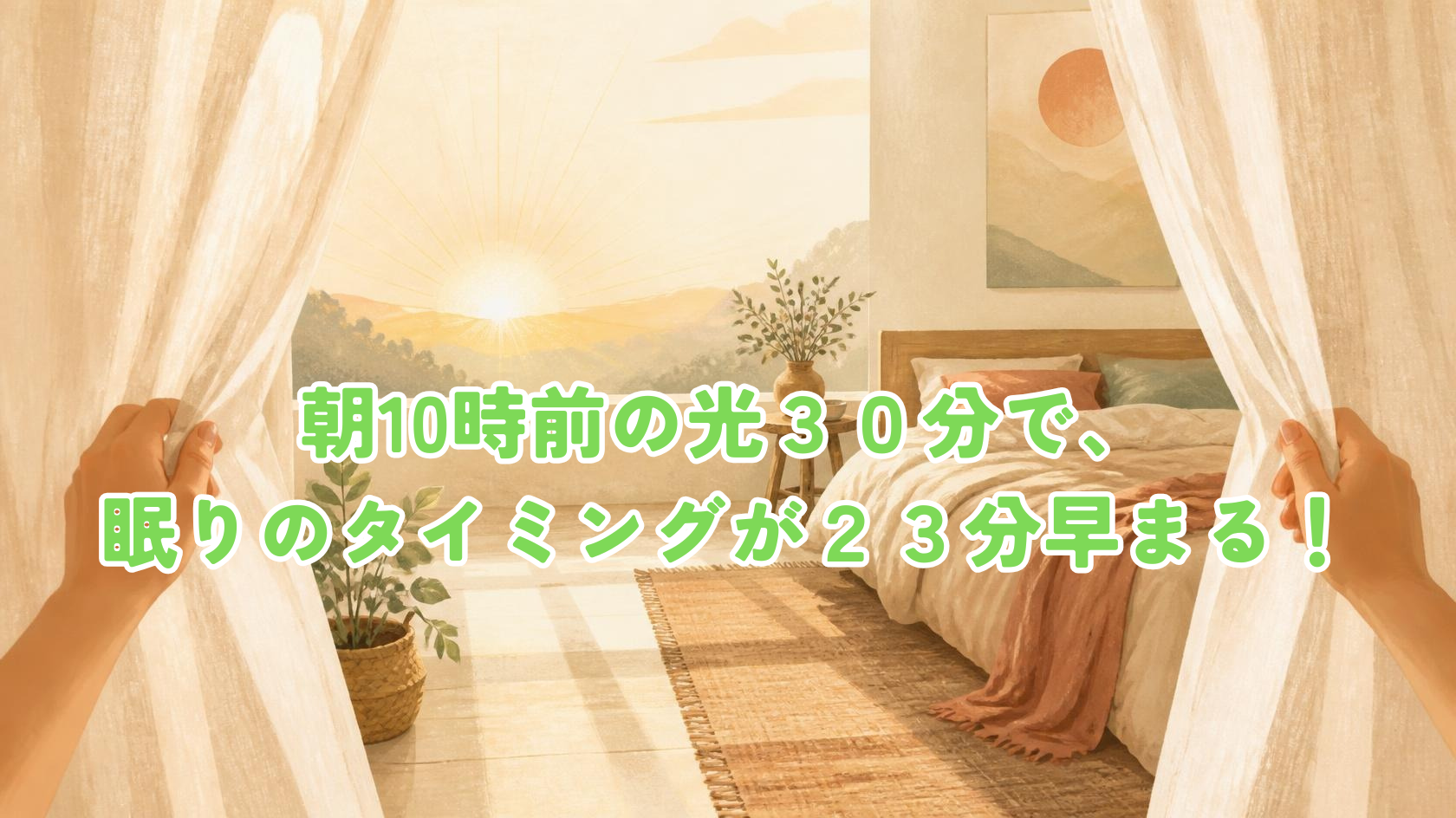
朝10時前の光30分で、眠りのタイミングが23分早まる!

A pair of hands drawing open a light linen curtain, warm morning sunlight flooding across a simple bedroom floor and an unmade bed. Wide calm composition, hopeful early-day atmosphere. Warm natural editorial illustration. Palette: warm cream #F7F1E8, soft terracotta #C97B5A, sage green #8AA08A, muted clay brown #8C6B58, pale morning gold. Soft diffused daylight, gentle organic shapes, hand-drawn feel with subtle paper grain, generous white space, no text, calm and hopeful mood, high resolution.
「早く寝よう」と決意した日ほど眠れなくて、結局スマホを触ってしまう。


そんな夜を繰り返していませんか?


ブラジルの成人1,762人を調べた研究が、意外にシンプルな手がかりを示しました。

カギは夜ではなく、朝にありました。

この研究で何が分かったのですか?

この研究で、午前10時前に光を浴びた時間が長い人ほど、眠りの時間帯が前にずれていたことが明らかになりました。


ブラジル連邦オウロプレト大学のメネゼス=ジュニオル氏らが、学術誌『BMC Public Health』に発表した研究です。

ブラジルの中規模都市2つで、成人1,762人に生活と睡眠についてのアンケートに答えてもらいました。


ここで出てくるのが「睡眠中点」という考え方です。

睡眠中点とは、寝入った時刻と起きた時刻のちょうど真ん中のことです。

たとえば、0時に寝て6時に起きるなら、真ん中は午前3時になります。


この真ん中の時刻が早いほど、体のリズムが昼と夜のサイクルに合っている状態です。

逆に遅いほど、体内時計が社会の時間割からズレている——いわゆる夜型ということになります。


結果はこうでした。

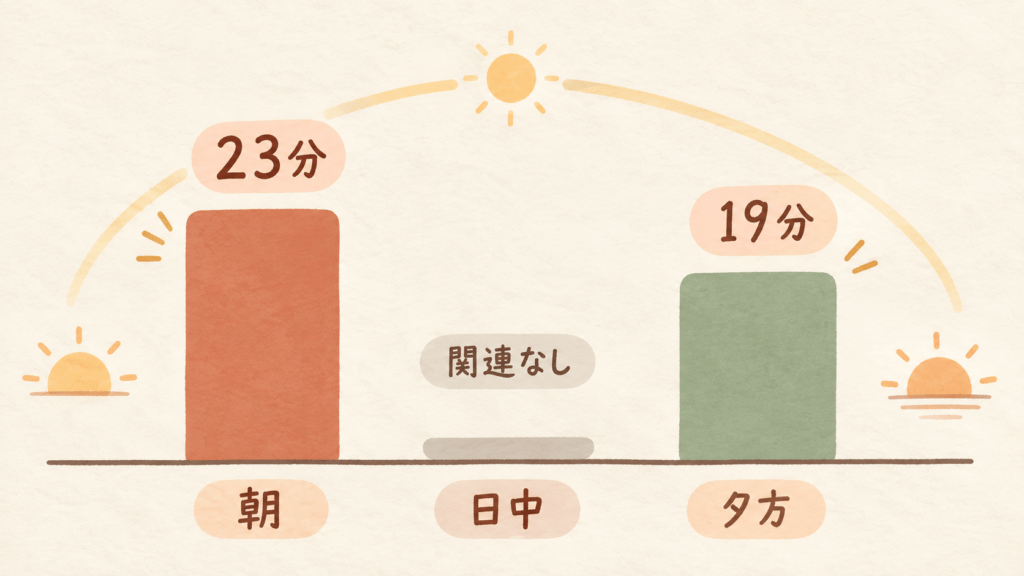
午前10時前の光を30分多く浴びるごとに、睡眠中点が平均23分早まっていた。


30分外に出るだけで、体のリズムがおよそ23分前に動く計算です。

しかも、朝の光だけが睡眠の質の総合スコアの良さとも結びついていました。
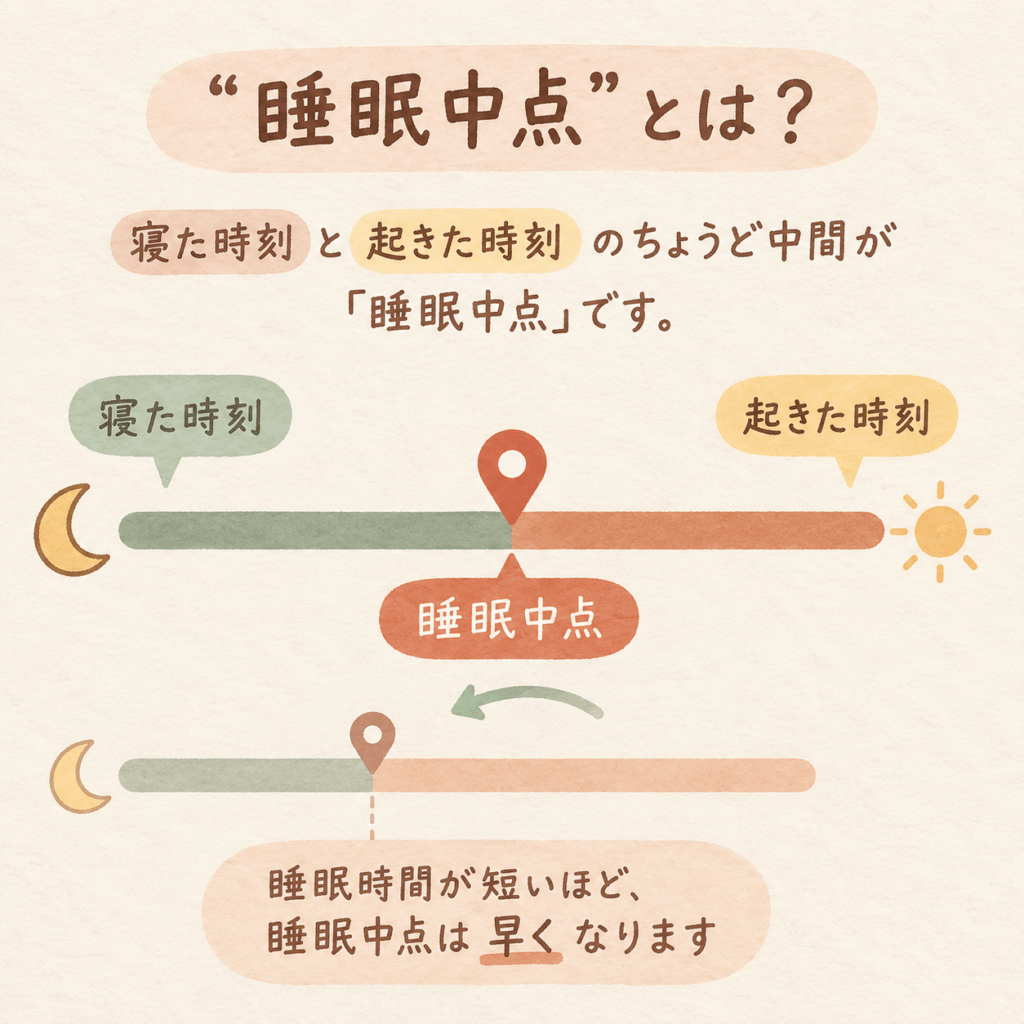
 

A simple horizontal timeline bar with a crescent moon icon at the left end and a small sun icon at the right end, and a clear marker pin at the exact midpoint of the bar. A faint duplicate of the same bar sits slightly shifted to the left below it, showing the midpoint moving earlier. Flat, minimal, no text. Warm natural editorial illustration. Palette: warm cream #F7F1E8, soft terracotta #C97B5A, sage green #8AA08A, muted clay brown #8C6B58, pale morning gold. Soft diffused daylight, gentle organic shapes, hand-drawn feel with subtle paper grain, generous white space, no text, calm and hopeful mood, high resolution.

なぜ「朝10時前」なのですか?

体内時計は、1日のどの時間の光にも同じように反応するわけではないからです。

研究では、光を浴びた時間帯を3つに分けて調べています。


結果が時間帯ごとにはっきり違いました。

光を浴びた時間帯 睡眠中点への効果(30分ごと)
午前10時前 23分早まる
午前10時〜午後3時 関連なし
午後3時以降 19分早まる

注目したいのは真ん中の行です。

日中のいちばん明るい時間帯の光には、意味のある関連が出ませんでした。

つまり、昼にたくさん浴びたから大丈夫とはならない、ということです。体内時計が反応しているのは、1日の量ではなく両端のタイミングでした。


なお、午後3時以降の光でも早まっていた点は、少し解釈が難しいところです。

一般には夕方の光はリズムを後ろにずらすと考えられているからです。


外に出る習慣そのものが生活リズムの整った人に多い、といった別の要因が混ざっている可能性があります。

研究者たちも、原因と結果までは言えないと述べています。
 

A minimal chart on warm cream showing three vertical bars left to right: a tall terracotta bar, a nearly flat faded grey bar in the middle, and a medium sage-green bar. A soft arc of daylight passes above them from left to right. Thin hand-drawn baseline, no text labels. Warm natural editorial illustration. Palette: warm cream #F7F1E8, soft terracotta #C97B5A, sage green #8AA08A, muted clay brown #8C6B58, pale morning gold. Soft diffused daylight, gentle organic shapes, hand-drawn feel with subtle paper grain, generous white space, no text, calm and hopeful mood, high resolution.

朝日を浴びれば、寝付きは良くなりますか?

ここが一番正直にお伝えしたいところです。

この研究では、寝付きの良さは改善していませんでした。


有意な関連が出なかった項目は、次の3つです。

  • 総睡眠時間——朝日を浴びても、長く眠れるようにはなっていなかった
  • 入眠潜時——布団に入ってから眠るまでの時間は、変わっていなかった
  • 睡眠効率——布団にいる時間のうち実際に眠っていた割合も、変わらなかった

がっかりさせたなら申し訳ありません。でも、この結果はむしろ役に立ちます。


朝の光が動かすのは、眠りの量ではなくタイミングだからです。


だとすると、こう整理できます。

あなたの寝付きの悪さが「体内時計が後ろにズレていて、まだ眠くなる時刻が来ていない」せいなら、朝の光は効く可能性があります。


一方で、不安で頭が回って眠れない、痛みで目が覚めるといったタイプなら、光だけでは届きません。別の対処が必要です。

自分の寝付きの悪さがどちらなのかを見分けることが、最初の一歩になります。
 

A person lying awake in bed at night seen from a respectful distance, one arm resting above the head, soft blue moonlight through a window, a small clock glowing faintly on the nightstand. Quiet and gentle rather than distressing, face undetailed. Warm natural editorial illustration. Palette: warm cream #F7F1E8, soft terracotta #C97B5A, sage green #8AA08A, muted clay brown #8C6B58, pale morning gold. Soft diffused daylight, gentle organic shapes, hand-drawn feel with subtle paper grain, generous white space, no text, calm and hopeful mood, high resolution.

明日から、具体的に何をすればいいですか?

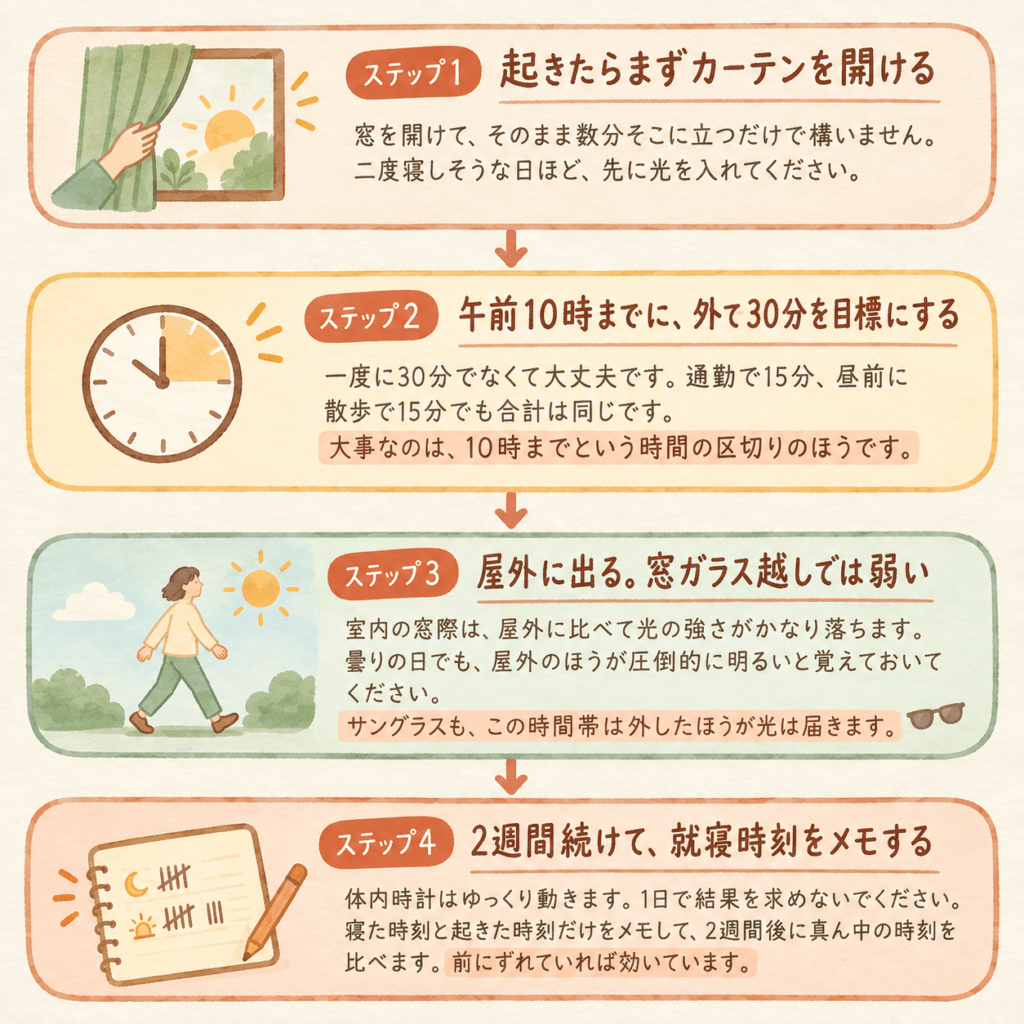
4つのステップにまとめました。お金も道具もいりません。

ステップ1:起きたらまずカーテンを開ける

窓を開けて、そのまま数分そこに立つだけで構いません。

二度寝しそうな日ほど、先に光を入れてください。

ステップ2:午前10時までに、外で30分を目標にする

一度に30分でなくて大丈夫です。通勤で15分、昼前に散歩で15分でも合計は同じです。

大事なのは、10時までという時間の区切りのほうです。

ステップ3:屋外に出る。窓ガラス越しでは弱い

室内の窓際は、屋外に比べて光の強さがかなり落ちます。

曇りの日でも、屋外のほうが圧倒的に明るいと覚えておいてください。

サングラスも、この時間帯は外したほうが光は届きます。

ステップ4:2週間続けて、就寝時刻をメモする

体内時計はゆっくり動きます。1日で結果を求めないでください。

寝た時刻と起きた時刻だけをメモして、2週間後に真ん中の時刻を比べます。

前にずれていれば効いています。
 

A vertical four-step flow of four rounded cards connected by soft downward arrows, each holding a simple hand-drawn icon: an opening curtain, a clock face with a marked morning segment, a walking figure under an open sky, and a small notebook with tally marks. Warm textured background, no text. Warm natural editorial illustration. Palette: warm cream #F7F1E8, soft terracotta #C97B5A, sage green #8AA08A, muted clay brown #8C6B58, pale morning gold. Soft diffused daylight, gentle organic shapes, hand-drawn feel with subtle paper grain, generous white space, no text, calm and hopeful mood, high resolution.

この研究を、どこまで信じていいですか?

参考にはなりますが、断定はできない段階です。


理由を4つ挙げます。

  1. ある一時点だけを調べた研究です。「朝日を浴びたから早く眠れるようになった」のか「もともと早寝早起きの人が朝に外へ出ていた」のかは、区別できていません。
  2. 光を浴びた時間はすべて本人の記憶による申告です。腕時計型の測定機器などは使われていません。
  3. 調査時期が2020年10月から12月、つまりコロナ禍のまっただ中でした。外出そのものが特殊な状況だった点は割り引く必要があります。
  4. ブラジルは南半球なので、この時期は日本でいう春から初夏にあたります。日本の冬にそのまま当てはまるかは分かりません。


とはいえ、朝に外へ出ることは低コストで害の少ない行動です。

効果が確実でなくても、試す価値は十分にあります。


もし2週間試しても変化がなく、日中の眠気や気分の落ち込みが続くようなら、睡眠外来や心療内科で相談してみてください。

不眠には認知行動療法という、効果の確かめられた方法もあります。

まとめ

  1. 成人1,762人の研究で、午前10時前の光30分ごとに睡眠中点が23分早まった
  2. 睡眠中点とは、寝た時刻と起きた時刻のちょうど真ん中のこと
  3. 効果が出るのは1日の両端。午前10時〜午後3時の光には有意な関連がなかった
  4. ただし総睡眠時間・寝付きまでの時間・睡眠効率は変わっていない
  5. 朝の光が動かすのは眠りの「量」ではなく「タイミング」


今夜すぐ眠くなる魔法ではありません。

でも、明日の朝カーテンを開けることは、今日からできます。


まずは2週間、朝10時までの30分から試してみてください。


【出典】

Menezes-Júnior, L. A. A., Sabião, T. S., Carraro, J. C. C., Machado-Coelho, G. L. L., & Meireles, A. L. The role of sunlight in sleep regulation: analysis of morning, evening and late exposure. BMC Public Health.(Federal University of Ouro Preto)

PsyPost「Morning sunlight exposure is linked to earlier sleep schedules


【あわせて読みたい】

A calm, modern flat-style illustration: a person lying in bed at night, glancing anxiously at a glowing smartphone showing a low sleep score. Soft navy and blue palette, minimal clean lines, generous white space, subtle moon and data-graph motifs. Simple modern editorial style, 1200x630.
Minimal professional editorial illustration, a single human head silhouette in profile made of soft flowing lines, a faint glowing wave passing through the brain suggesting a brief sleep-like moment, muted navy and slate blue palette with one soft teal accent, generous negative space, clean flat vector style, calm scientific tone, no text
A young person in their late teens sleeping peacefully in a cozy bed on a sunny weekend morning, soft natural morning light through linen curtains, warm earthy color palette (terracotta, sage green, cream, oatmeal), gentle and calming mood, natural textures, lifestyle editorial photography style, shallow depth of field, no text. Aspect ratio 1200x630.
A serene night scene blending into a human head silhouette filled with soft glowing brain-wave patterns and stars, calm navy-to-teal gradient, minimal modern medical- editorial style, soft light, clean negative space for title text, flat illustration, trustworthy and calming mood, no text.
スポンサーリンク

コメントを残す

メールアドレスが公開されることはありません。 が付いている欄は必須項目です

ABOUT US
tetsuya
北海道在住の35歳。 元ホテルマン。30歳で一念発起して、大学に入り直し、心理学を学ぶ。医療機関で実務経験を積んだのち、公認心理師資格を取得。月に5冊以上本を読んだり、論文を読み漁ったりして得た知識をブログでシェアします。